
I make vegetable kabobs all summer long when I want a fast, healthy side that still looks special on the plate. In my kitchen these go from cutting board to grill in about the time it takes to set a table; they’re one of my go-to weeknight wins when I want minimal fuss and maximum color. The lemon-herb marinade I use brightens every kind of vegetable, and the char on the grill brings out a sweet, smoky note I look for in simple veggie sides.
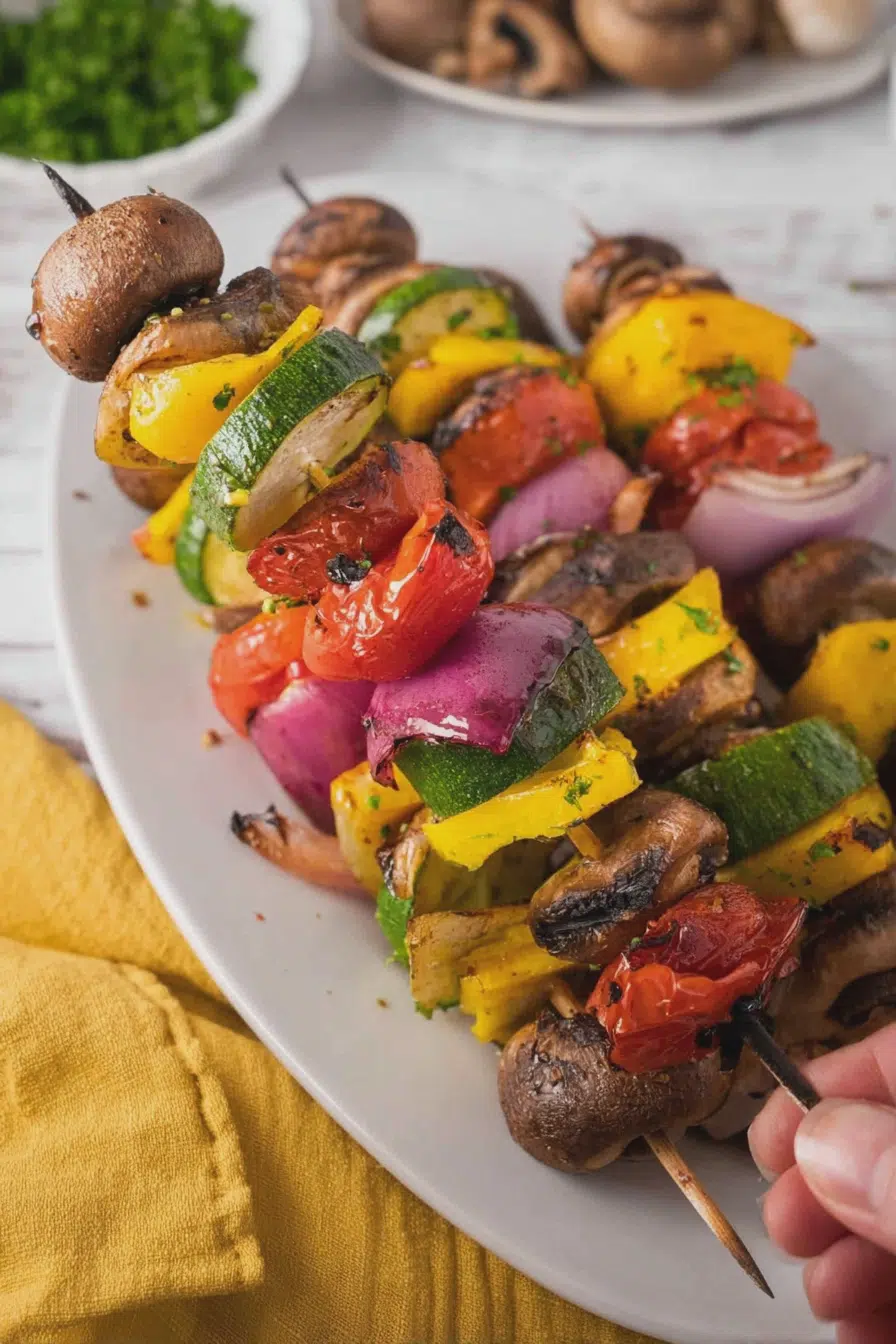
When I’m pressed for time I pick vegetables that cook at similar rates and cut them uniformly; that step alone shaves minutes off the grill and keeps everything tender but not mushy. I often reach for cremini mushrooms, cherry tomatoes, bell peppers, zucchini, and red onion — popular choices that hold up well and deliver great color. If you’re wondering what vegetables work best for kabobs, those are the basics I turn to most mornings when prepping for an evening cookout.
I’ll walk you through exactly what I use in my weeknight version, how I thread and space the pieces for even cooking, and a few marinade ideas so you can tailor these kabobs to vegetarian or vegan preferences. You’ll get practical timing, temperature advice, and storage tips so leftovers stay appealing and reheated properly.
Cooking this enough times taught me small fixes that make a big difference: soak wooden skewers, pat veggies dry before marinating, and keep a medium-high grill so you get a quick sear without losing the vegetable’s snap. I’ll share those tips as short, scannable items so you can follow along in a hurry.
Weeknight Win: Why These Vegetable Kabobs Save Time and Taste Great
These kabobs are built for speed and flavor. Prep is fast because you’re mostly chopping and threading — no long slow cooking — and the cook time is short when vegetables are cut to uniform sizes. Cleanup is also easy: a hot grill and a quick brush mean minimal sticking and little to wash afterward. Using seasonal vegetables makes them taste brighter and reduces hands-on time since peak-season produce is more tender and cooks more predictably.
The aroma of lemon and olive oil hitting a hot grill is immediate: citrus lifts the earthy mushrooms and sweet bell peppers, while a quick char adds caramelized notes. Because the recipe is flexible, you can swap in whatever is fresh at the market and still end up with a colorful, satisfying side that complements summer mains or a casual weeknight protein.
What You’ll Need for Vegetable Kabobs
- Cremini Mushrooms – Hold up on the grill and add meaty texture; great for vegetarian heft.
- Cherry Tomatoes – Burst of acidity and color; place them near the end of grilling to avoid splitting.
- Bell Peppers (red and green) – Sweetness and crunch; use a mix of colors for visual appeal.
- Red Onion – Adds sweetness when charred and helps layer flavor.
- Zucchini and Yellow Squash – Tender, neutral base that soaks marinades; slice into thick rounds for even cooking.
- Olive Oil & Lemon – The basic binder and brightener for marinades; swap in flavored oils if desired.
- Herbs and Spices – Italian seasoning, garlic powder, salt, and pepper are versatile; fresh herbs can be added after grilling.
- Skewers – Wooden skewers (soak before grilling) or metal skewers; a grill basket is handy if you prefer not to skewer.
- Substitutions & Seasonal Picks – Swap mushrooms for baby eggplant slices, add asparagus tips in spring, or use fingerling potatoes parboiled first for heartier kabobs.
- Vegan & Vegetarian Marinade Ideas – Include balsamic or teriyaki-based options if you want different regional flavors; see the Marinade Ideas section below for proportions.
How to Prepare Vegetable Kabobs
- Pat all vegetables dry before you start; excess moisture leads to steaming instead of searing.
- Cut vegetables into uniform pieces so they cook at the same rate — aim for similarly sized chunks or rounds.
- Soak wooden skewers at least 30 minutes to prevent burning; if using metal skewers, use a cloth or oven mitt when handling hot metal.
- Whisk together your marinade and toss the vegetables briefly to coat evenly; marinate no longer than a short period for delicate items (a quick 10–20 minutes is usually enough for most vegetables). Mixing in a bit of acid (lemon or vinegar) brightens flavors quickly without making veggies soggy.
- Thread vegetables alternating textures and colors to balance cooking — leave a small gap between pieces for hot air circulation.
- Brush the kabobs with any remaining marinade just before they hit the grill to help promote browning and flavor concentration.
Prevent Soggy Vegetables and Keep a Perfect Char
- Preheat the grill to medium-high so vegetables get an immediate sear; this prevents them from releasing too much water and becoming soggy.
- Avoid over-marinating acidic mixtures on delicate items; lemon and vinegar break down cells over time, which can make squash and tomatoes soft if left too long.
- Use the right heat: 375–450°F (medium-high) gives a good char without burning; adjust if your grill runs hot or cool.
- Flip kabobs only once or twice — frequent flipping causes pieces to lose juices and increases cook time.
- Look for deep grill marks and a slight translucence in onions and squash; avoid a blackened exterior which means overcooking.
Threading and Spacing for Even, Quick Cooking
- Alternate dense and tender vegetables so the heat is distributed: for example, mushroom → pepper → zucchini → onion → tomato near the end.
- Leave a small space between each piece so hot air can circulate; tightly packed pieces steam rather than char.
- Keep similar-thickness pieces together on the same skewer if you have vegetables with very different cook times (e.g., parboiled potatoes on separate skewers).
- Place softer items like cherry tomatoes toward the ends of the skewer so they’re easier to remove if they burst while cooking.
Marinade Ideas for Vegetarian and Vegan Variations
- Simple Lemon-Herb (my go-to) – Olive oil, fresh lemon juice, Italian seasoning, garlic powder, salt, and black pepper. Bright and fast; works for all vegetables.
- Balsamic-Garlic – Balsamic vinegar, olive oil, minced garlic, a touch of maple syrup or brown sugar, salt, and pepper. Rich and slightly sweet; great with mushrooms and peppers.
- Teriyaki-Style (vegan) – Soy sauce (or tamari), a little brown sugar or maple syrup, grated ginger, garlic, and a splash of rice vinegar. Brush on near the end to prevent burning from the sugar.
- Chimichurri-Inspired – Olive oil, red wine vinegar, lots of chopped parsley and oregano, garlic, and crushed red pepper. Herb-forward and zesty; finish with fresh herbs off the grill.
- Smoky Chipotle-Lime – Oil, lime juice, chipotle powder or adobo paste (small amount), cumin, and salt. Adds warmth and smokiness—pair with corn or sweet potato slices.
- Southeast Asian Peanut-Lime – Peanut butter, soy sauce, lime juice, a little warm water to thin, and chili flakes. Use as a dipping sauce rather than to marinate if you want to avoid burning the nut butter.
- Tip: For vegan marinades, use maple syrup or agave instead of honey and tamari instead of regular soy sauce if you need gluten-free options.
Grilling Time, Temperature, and Tools That Work
- Preheat the grill to medium-high (around 375–450°F) so you get quick searing and caramelization.
- Approximate grill times per side: mushrooms and peppers 3–5 minutes per side; zucchini and yellow squash 3–4 minutes per side; onions 4–6 minutes per side; cherry tomatoes 1–2 minutes (add near the end). Adjust based on thickness.
- Use long tongs and a flat spatula to turn skewers without losing pieces; a grill basket is a great alternative for smaller cut vegetables.
- A reliable instant-read thermometer isn’t necessary for vegetables, but keep a timer handy and rely on visual cues: good char and tender bite indicate doneness.
How to Store Your Vegetable Kabobs
- Refrigerate cooked kabobs in an airtight container for up to 3 days; place a paper towel underneath to absorb excess moisture if you stack them.
- To reheat, use a hot grill or oven at moderate heat to restore some char and texture; avoid microwaving if you want to preserve the grilled exterior.
- Freezing cooked kabobs is possible for sturdier vegetables: wrap tightly and freeze for up to 2 months. Thaw overnight in the fridge and reheat on a grill or in the oven.
- Leftover kabob pieces work well tossed into salads, grain bowls, or wrapped in flatbreads with a creamy sauce.
Serving Suggestions and Easy Sides
These kabobs pair well with simple grains and fresh salads to keep the meal light and colorful. I often serve them with couscous or quinoa, a lemony tahini sauce, or a cool cucumber yogurt (or vegan cashew yogurt) for contrast. If you want a themed plate, try Mediterranean sides like hummus and warm pita, or serve with cilantro-lime rice and black beans for a Tex-Mex twist.
- Simple sides: couscous, herbed quinoa, or a crisp green salad.
- Sauces: tzatziki or a garlicky hummus for Mediterranean vibes; peanut sauce or a soy-sesame drizzle for Asian-inspired kabobs.
- Presentation tip: serve kabobs over a bed of grains and sprinkle with fresh herbs and a squeeze of lemon for brightness.
Nutrition: Calories and Macros per Serving
Per serving, expect a light profile focused on vegetables: roughly 125 calories, with most calories from healthy fats in the olive oil and the rest from carbohydrates and a small amount of protein. A typical serving provides fiber, vitamin C (from peppers and tomatoes), vitamin A (from yellow and red vegetables), potassium, and antioxidants from mushrooms and squash.
For lower-calorie options, reduce the amount of added oil or use an oil spray to lightly coat the vegetables. To boost protein, serve the kabobs with a side of chickpeas, grilled tempeh, or a quinoa salad. Adding nuts or seeds as a finish increases protein and healthy fats without much extra prep.
Pro-Tips
- Pat vegetables dry before marinating to avoid steaming on the grill.
- Cut pieces uniformly so everything finishes at the same time.
- Brush with marinade while grilling for extra gloss and flavor, but reserve sugary glazes for the last minute to avoid flare-ups.
- Soak wooden skewers for at least 30 minutes to prevent burning; use metal skewers for faster turnaround.
- Finish with fresh herbs and a squeeze of lemon right off the grill to lift the flavors.
Troubleshooting
- Vegetables are soggy — you likely used too much marinade time or cooked at too low a temperature; pat dry and use medium-high heat next time.
- Skewers are sticking — make sure the grill is properly preheated and oiled; a hot, clean grate prevents sticking.
- Tomatoes burst — add cherry tomatoes near the end of cooking or use a thicker-skinned variety.
- Uneven cooking — check piece sizes and distribute dense vegetables on separate skewers if needed.
Variations
- Mediterranean: Use a lemon-oregano marinade and serve with hummus and warm pita.
- Asian-Inspired: Teriyaki glaze with sesame seeds and scallions on finish.
- Southwest: Chipotle-lime marinade with corn and sweet potato slices for a hearty option.
- Spring Mix: Add asparagus tips and snap peas with a light lemon vinaigrette.
Frequently Asked Questions
What vegetables work best for kabobs?
Popular choices include cremini mushrooms, cherry tomatoes, bell peppers, zucchini, and onions. You can mix and match based on your personal preferences!
Can I use a different marinade for the kabobs?
Absolutely! Feel free to get creative with your marinades. You can try adding different herbs, spices, or even vinegar and soy sauce for a unique flavor.
How do I avoid soggy vegetables when grilling?
To prevent soggy vegetables, make sure to pat them dry before marinating and ensure they are evenly spaced on the skewers for proper grilling.
What can I serve with vegetable kabobs?
Vegetable kabobs pair wonderfully with rice, quinoa, or even a fresh salad. You could also serve them with a tangy dipping sauce for an extra kick!
How do I store leftover vegetable kabobs?
Store leftover kabobs in an airtight container in the fridge for up to 3 days. Reheat them in the grill or oven to maintain that delicious char!
Vegetable Kabobs
Ingredients
Method
- In a small bowl, whisk together ¼ cup olive oil, juice from 1 lemon, 1 teaspoon Italian seasoning, ½ teaspoon garlic powder, ½ teaspoon salt, and ½ teaspoon pepper.
- Thread the vegetables onto skewers.
- Use a basting brush to coat the vegetables evenly with the marinade.
- Preheat a grill to medium-high heat.
- Grill the vegetable kabobs for 3–5 minutes per side until the vegetables reach your desired tenderness.
- Serve immediately and enjoy.
- Recipe Notes: If using wooden skewers, soak in water at least 30 minutes before using.
- If using metal skewers, handle with care using a hot pad.