
Spring pea soup is a bright, vibrant dish that perfectly captures the freshness of the season. Made with sweet green peas, aromatic vegetables, and simple pantry staples, this comforting yet light soup is ideal for a quick lunch, starter, or healthy dinner. The beauty of spring pea soup lies in its simplicity—fresh ingredients blend together to create a naturally creamy texture and delicate flavor without the need for heavy cream.
This spring pea soup is not only easy to prepare but also incredibly nutritious. Packed with plant-based protein, fiber, and vitamins, it’s a wholesome recipe that celebrates seasonal produce. Whether you use fresh peas from the farmers market or convenient frozen peas, this spring pea soup delivers a smooth texture, bright color, and refreshing taste in every spoonful.
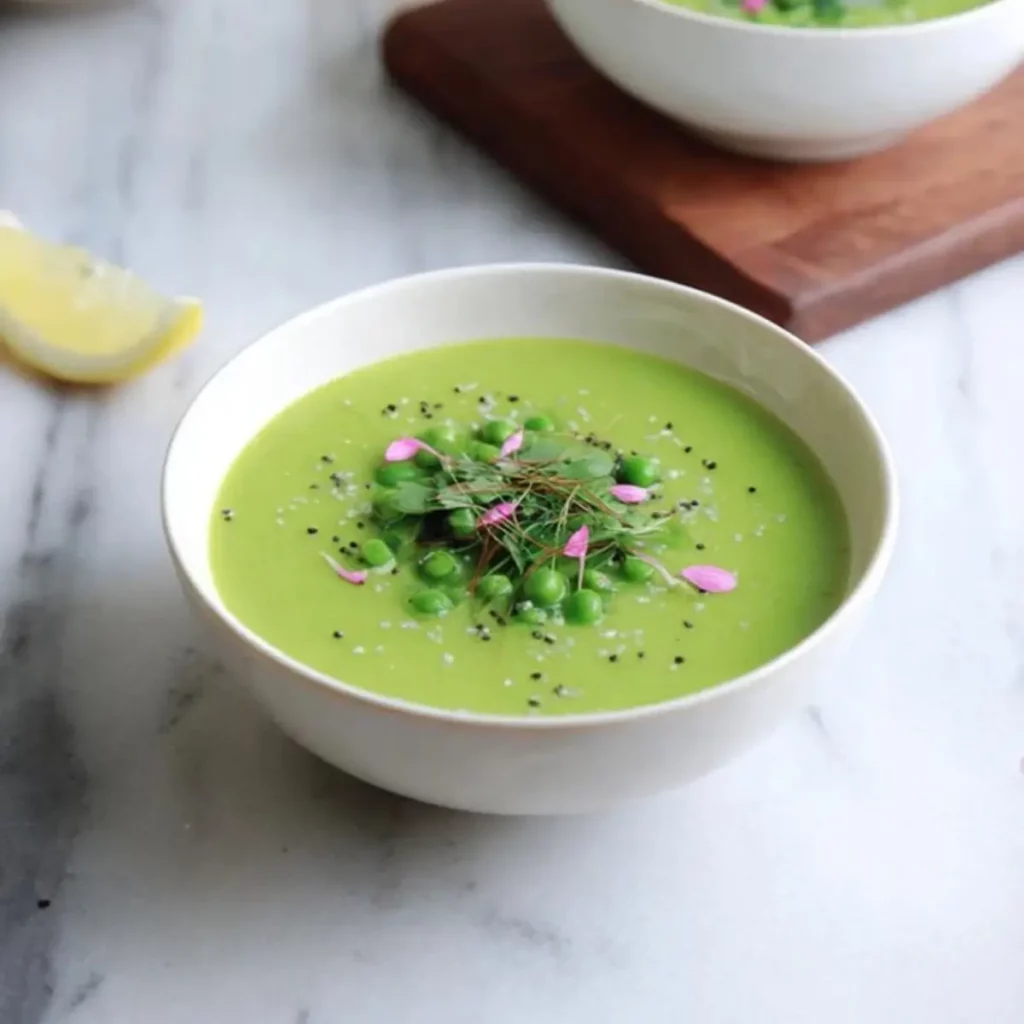
Table of Contents
Why This Spring Pea Soup Is Perfect for the Season
A bowl of spring pea soup is the essence of spring cooking—light, fresh, and nourishing. The natural sweetness of green peas pairs beautifully with herbs and aromatics, creating a comforting yet refreshing soup that feels both elegant and effortless.
One of the biggest advantages of this spring pea soup is its quick preparation. Unlike many soups that require hours of simmering, this recipe comes together in about 30 minutes. The peas cook quickly and blend into a silky texture that feels rich without being heavy.
Another reason this spring pea soup stands out is its versatility. It can be served warm on cool spring evenings or chilled for a refreshing summer-style starter. The vibrant green color also makes it visually appealing, making it a wonderful addition to brunch tables or light dinners.
From a nutritional standpoint, spring pea soup is loaded with benefits. Green peas are rich in plant-based protein, vitamin C, vitamin K, and fiber. Combined with vegetables and herbs, this soup becomes a nourishing meal that supports balanced eating without sacrificing flavor.
Fresh Ingredients That Build Flavor in Spring Pea Soup
The flavor of spring pea soup depends on simple, fresh ingredients that complement the sweetness of peas while adding depth and aroma.
• Green Peas: The star of spring pea soup, providing sweetness, vibrant color, and a creamy texture when blended.
• Onion: Adds a gentle savory base that balances the natural sweetness of the peas.
• Garlic: Brings warmth and aromatic depth to the soup.
• Leek: Contributes a mild onion-like flavor that enhances the delicate taste of the spring pea soup.
• Potato: Helps thicken the soup naturally and creates a silky consistency.
• Vegetable Broth: Forms the liquid base, adding depth while keeping the soup light and flavorful.
• Olive Oil: Used for sautéing the aromatics and adding subtle richness.
• Fresh Mint: A classic pairing with peas that adds brightness and freshness.
• Lemon Juice: Enhances the flavors and balances the sweetness with a touch of acidity.
• Salt: Brings out the natural flavors of the vegetables.
• Black Pepper: Adds a subtle hint of warmth.
• Fresh Herbs: Optional garnish such as parsley or chives for added color and aroma.
Alternative Ingredient Suggestions for Spring Pea Soup
One of the strengths of spring pea soup is how adaptable it can be. If certain ingredients aren’t available or if you want to adjust the recipe for dietary needs, several simple substitutions work beautifully.
If fresh peas are not in season, frozen peas are an excellent alternative. They are picked and frozen at peak freshness, making them perfect for a vibrant spring pea soup any time of the year.
For a dairy-free creamy texture, you can blend in a small amount of coconut milk or soaked cashews. These ingredients create a richer consistency while maintaining the fresh flavor of the soup.
If you prefer a slightly sweeter and milder soup, substitute shallots for onions. Shallots add gentle sweetness without overpowering the delicate pea flavor.
Potatoes can be replaced with cauliflower for a lighter variation. Cauliflower still provides body and creaminess to the spring pea soup while reducing the starch content.
Herb variations can also transform the flavor. Basil, tarragon, or dill can replace mint to create a different herb profile while keeping the soup fresh and aromatic.
Step-by-Step Instructions for Spring Pea Soup
- Heat olive oil in a large pot over medium heat. Once the oil is warm, add the chopped onion and sliced leek. Cook for about five minutes, stirring occasionally, until the vegetables soften and become fragrant. This step creates the aromatic base that gives spring pea soup its depth of flavor.
- Add the minced garlic and cook for another minute. Stir frequently so the garlic becomes fragrant without burning. Garlic enhances the overall taste of the spring pea soup and blends beautifully with the sweet peas.
- Stir in the diced potato and cook for two minutes. The potato helps thicken the soup naturally and contributes to the smooth, creamy consistency.
- Pour in the vegetable broth and bring the mixture to a gentle simmer. Allow it to cook for about ten minutes or until the potatoes become tender when pierced with a fork.
- Add the green peas to the pot and stir well. Cook for about three to five minutes. Because peas cook quickly, avoid overcooking them to maintain the bright green color and fresh flavor that define a good spring pea soup.
- Remove the pot from heat and add the fresh mint leaves. The residual warmth will release the mint’s aroma without dulling its freshness.
- Using an immersion blender, blend the soup directly in the pot until completely smooth. Alternatively, carefully transfer the mixture to a blender and blend in batches until silky.
- Return the blended soup to the pot if necessary and warm it gently over low heat. Taste the spring pea soup and adjust seasoning with salt, black pepper, and a squeeze of fresh lemon juice.
- If the soup appears too thick, add a small amount of vegetable broth or water until the desired consistency is reached.
- Ladle the spring pea soup into bowls and garnish with fresh herbs, a drizzle of olive oil, or a few whole peas for presentation.
Tips for the Best Spring Pea Soup
Achieving the perfect spring pea soup is simple, but a few small techniques can elevate the flavor and texture significantly.
Always avoid overcooking the peas. Prolonged cooking dulls their bright green color and reduces their naturally sweet flavor. Cooking them briefly keeps the soup vibrant and fresh.
Blending thoroughly is key to a silky texture. If you want an ultra-smooth spring pea soup, strain the blended soup through a fine mesh sieve. This step removes any fibrous bits and creates a refined consistency.
Season gradually as you cook. Adding salt in stages allows the flavors to develop without becoming overly salty.
If you enjoy a richer version of spring pea soup, stir in a small splash of cream or yogurt just before serving. This adds a velvety finish while maintaining the soup’s delicate flavor.
For meal prep, spring pea soup stores very well. Refrigerate leftovers in an airtight container for up to three days. The flavors often deepen as the soup rests.
Pairing Ideas and Flavor Variations
Spring pea soup pairs beautifully with a variety of light dishes and simple sides. Because the soup is delicate and fresh, it complements foods that share similar seasonal flavors.
Crusty artisan bread is one of the best accompaniments. A slice of toasted sourdough or whole-grain bread adds texture and helps soak up the flavorful soup.
A light salad with lemon vinaigrette also pairs nicely with spring pea soup. The acidity of the dressing enhances the sweetness of the peas while keeping the meal balanced.
For added protein, serve the soup alongside grilled chicken, roasted salmon, or a chickpea salad. These options transform spring pea soup into a satisfying complete meal.
There are also several creative variations of spring pea soup worth trying. A spicy version can be made by adding a pinch of chili flakes or fresh green chili while sautéing the aromatics.
Another variation includes blending in fresh spinach or kale for an extra boost of greens. This not only enhances the nutritional value but also deepens the vibrant green color of the soup.
You can also garnish spring pea soup with toasted seeds, crispy chickpeas, or homemade croutons to introduce a crunchy contrast to the smooth texture.
If serving spring pea soup as an appetizer for a dinner party, consider topping it with a swirl of yogurt, a drizzle of herb oil, or shaved parmesan for an elegant presentation.
Nutritional Benefits of Spring Pea Soup
Spring pea soup is more than just a comforting dish—it is also packed with nutrients that support overall health.
Green peas are an excellent source of plant-based protein and fiber, making this soup filling and satisfying. Fiber supports digestion and helps maintain steady energy levels throughout the day.
Peas are also rich in vitamin C, which supports immune health and helps the body absorb iron. Vitamin K found in peas plays an important role in bone health and proper blood clotting.
Because spring pea soup relies on vegetables and simple ingredients, it is naturally low in saturated fat while still providing plenty of flavor. This makes it an excellent option for anyone seeking lighter meals that still feel comforting.
The herbs and vegetables used in spring pea soup also contribute antioxidants and beneficial plant compounds. These nutrients support overall wellness and help reduce inflammation.
When prepared with vegetable broth, spring pea soup becomes a completely plant-based meal that fits well into vegetarian and vegan diets while still delivering rich flavor and satisfying texture.
A warm bowl of spring pea soup showcases how seasonal ingredients can transform simple cooking into something truly special. With its bright color, fresh taste, and nourishing qualities, this recipe is a perfect way to celebrate the flavors of spring while enjoying a healthy homemade meal.
Conclusion
Spring pea soup is a simple yet vibrant dish that highlights the natural sweetness and freshness of seasonal ingredients. With its smooth texture, bright green color, and delicate herb flavor, this spring pea soup offers a comforting meal that feels both light and nourishing. The combination of sweet peas, aromatic vegetables, and fresh herbs creates a balanced soup that is satisfying without being heavy.
One of the greatest strengths of spring pea soup is its versatility. It can be served warm for a cozy meal on cooler days or chilled as a refreshing starter when the weather becomes warmer. The recipe also adapts easily to different dietary needs, allowing you to experiment with alternative ingredients, herbs, and garnishes while still preserving the core flavor.
Because this spring pea soup requires minimal ingredients and cooks quickly, it is perfect for busy weeknights or last-minute meals. At the same time, its elegant presentation makes it suitable for entertaining guests or serving as a sophisticated starter at gatherings.
By using fresh or frozen peas and a few simple pantry staples, anyone can create a bowl of spring pea soup that is both nutritious and delicious. Whether paired with crusty bread, a light salad, or a protein-rich side dish, this recipe is a wonderful way to celebrate the bright, fresh flavors of spring.
Frequently Asked Questions About Spring Pea Soup
Can I use frozen peas for spring pea soup?
Yes, frozen peas work perfectly for spring pea soup and are often just as flavorful as fresh peas. Because they are typically frozen at peak ripeness, frozen peas retain their sweetness and bright color. When using frozen peas, simply add them directly to the pot during cooking without thawing.
How do I make spring pea soup extra creamy?
To make spring pea soup creamier, you can blend the soup thoroughly until completely smooth and add a small amount of cream, coconut milk, or yogurt at the end of cooking. Another option is adding a small potato or a handful of soaked cashews before blending. These ingredients naturally thicken the soup and enhance its silky texture.
Can spring pea soup be served cold?
Yes, spring pea soup can be served chilled, making it a refreshing option for warmer months. After cooking and blending the soup, allow it to cool completely and refrigerate it for several hours. Chilled spring pea soup pairs beautifully with fresh herbs, lemon zest, or a drizzle of olive oil for added brightness.
More Relevant Recipes
- Easy Carrot Soup with Chermoula Recipe
- Spring Rolls with Peanut Sauce – Fresh, Healthy, and Easy
- Healthy Luscious Potato Leek Soup (Easy 30-Min Recipe)
spring pea soup

Spring pea soup is a fresh, vibrant, and nourishing seasonal soup made with sweet green peas, aromatic vegetables, and herbs. This smooth and naturally creamy soup comes together quickly and highlights the bright flavors of spring while remaining light, healthy, and satisfying.
- Prep Time: 10 minutes
- Cook Time: 20 minutes
- Total Time: 30 minutes
- Yield: 4 servings 1x
- Category: Soup
- Method: Stovetop
- Cuisine: European
- Diet: Vegetarian
Ingredients
- 2 tablespoons olive oil
- 1 medium onion, chopped
- 1 leek, sliced
- 2 cloves garlic, minced
- 1 medium potato, peeled and diced
- 4 cups green peas (fresh or frozen)
- 4 cups vegetable broth
- 2 tablespoons fresh mint leaves, chopped
- 1 tablespoon fresh lemon juice
- Salt, to taste
- Black pepper, to taste
- Fresh herbs such as parsley or chives for garnish (optional)
Instructions
- Heat olive oil in a large pot over medium heat. Add the chopped onion and sliced leek and sauté for about 5 minutes until softened and fragrant.
- Add the minced garlic and cook for another minute, stirring frequently to prevent burning.
- Stir in the diced potato and cook for 2 minutes to begin softening.
- Pour in the vegetable broth and bring the mixture to a gentle simmer. Cook for about 10 minutes or until the potatoes are tender.
- Add the green peas and cook for 3–5 minutes until they are bright green and tender.
- Remove the pot from heat and stir in the fresh mint leaves.
- Blend the soup using an immersion blender until completely smooth, or carefully transfer to a blender and blend in batches.
- Return the soup to the pot if needed and warm gently over low heat.
- Add lemon juice, salt, and black pepper to taste and adjust seasoning as needed.
- Serve the spring pea soup warm or chilled, garnished with fresh herbs and a drizzle of olive oil if desired.
Notes
- Frozen peas work well and keep the soup vibrant and sweet when fresh peas are not available.
- A small splash of cream, coconut milk, or yogurt can be added for a richer texture.
- Do not overcook the peas to maintain the bright green color and fresh flavor.
- If the soup is too thick after blending, add a little extra vegetable broth to reach the desired consistency.
- The soup can be served warm or chilled for a refreshing spring or summer meal.
- Store leftovers in an airtight container in the refrigerator for up to 3 days.
Nutrition
- Serving Size: 1 bowl
- Calories: 180 kcal
- Sugar: 6 g
- Sodium: 520 mg
- Fat: 6 g
- Saturated Fat: 1 g
- Unsaturated Fat: 5 g
- Trans Fat: 0 g
- Carbohydrates: 26 g
- Fiber: 7 g
- Protein: 8 g
- Cholesterol: 0 mg


