
Experience the fresh taste of spring with this Polenta with Spring Veggies recipe. Soft, creamy polenta forms a comforting base for tender, vibrant vegetables, topped with a zesty herby gremolata. Perfect for a quick, healthy dinner, this dish brings the best of seasonal produce to your table. Easy to prepare and adaptable for vegan, gluten-free, or protein-rich variations, it’s a colorful and elegant meal that feels gourmet yet is simple enough for any weeknight.
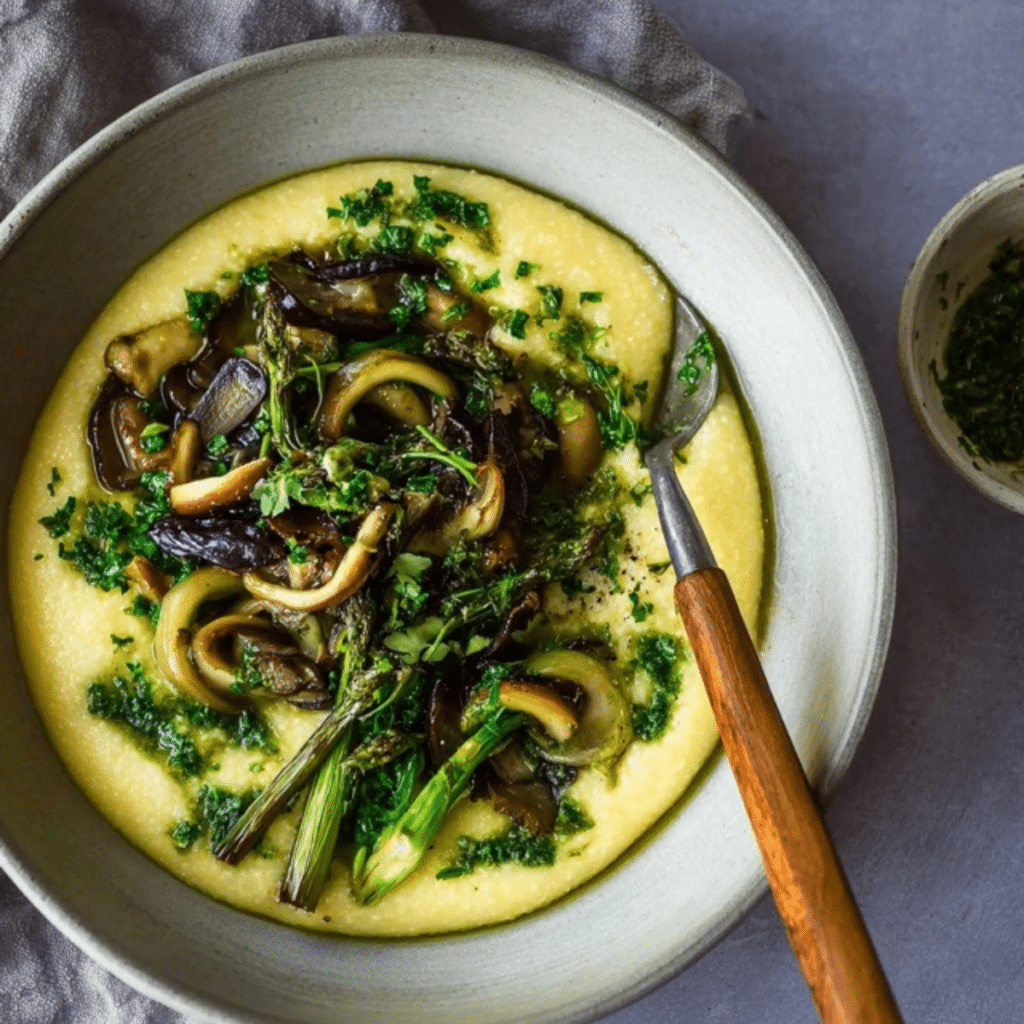
Table of Contents
Why You’ll Love Polenta with Spring Veggies
This Polenta with Spring Veggies recipe combines nutrition, flavor, and convenience. It’s healthy, highlighting fresh, seasonal vegetables that are full of vitamins and minerals. The dish is quick to make—ready in under 30 minutes—making it ideal for busy nights. Its creamy texture is achieved without heavy cream, using olive oil or optional goat cheese for richness. The herby gremolata adds a fresh, tangy punch that elevates the flavors of the vegetables and polenta. Whether served as a main or side, this recipe is both elegant and comforting.
Ingredients for Polenta with Spring Veggies
Polenta Base
- Polenta: Provides a creamy, comforting base with a slightly sweet corn flavor.
- Salt, onion powder, white pepper: Seasoning to enhance the natural taste of polenta.
- Olive oil, butter, or goat cheese: Adds richness and smooth texture.
Spring Vegetables
- Morel mushrooms: Earthy flavor and tender texture.
- Porcini mushrooms: Deep, savory umami.
- Asparagus: Adds crunch and fresh green taste.
- Fiddlehead ferns: Unique spring flavor, similar to asparagus.
- Shallot: Aromatic depth and subtle sweetness.
- Olive oil: For sautéing and enhancing flavors.
- Sherry wine or white wine: Provides gentle acidity to brighten the dish.
- Fresh thyme or tarragon: Adds herby aroma.
Gremolata Topping
- Parsley, garlic, lemon zest: Zesty and fragrant, elevating the polenta and veggies.
Alternative Ingredient Suggestions
- Mushrooms: Substitute with cremini, shiitake, or button mushrooms.
- Asparagus: Swap with snow peas, zucchini, green beans, or spring peas.
- Polenta base: Use yellow cornmeal or instant polenta for quicker cooking.
- Gremolata: Try basil or cilantro-based herb mixtures for a twist on flavor.
Step-by-Step Instructions
- Prepare the polenta: Bring water to a boil in a medium saucepan. Season with salt, onion powder, and white pepper. Gradually whisk in polenta, simmer, cover, and reduce heat to low. After 10 minutes, stir, then cook another 10 minutes. Finish by stirring in olive oil, butter, or goat cheese until creamy.
- Make the gremolata: While the polenta cooks, combine parsley, garlic, and lemon zest in a food processor or bowl. Blend to create a zesty, aromatic topping. Set aside.
- Sauté the vegetables: Heat olive oil in a skillet over medium heat. Add mushrooms first and cook until tender, about 4-5 minutes. Stir in shallots and remaining vegetables. Add wine or water and cook until veggies are fork-tender, 5 minutes. Adjust seasoning with salt and pepper.
- Assemble the dish: Spoon polenta into bowls or onto a serving platter. Top with sautéed spring vegetables and optional pea shoots. Drizzle gremolata over the top for a fresh, vibrant finish.
- Reheat if needed: If polenta thickens too much, gently reheat with a splash of water or oil, stirring until smooth.
Tips & Tricks for Perfect Polenta with Spring Veggies
- Whisk polenta continuously when adding cornmeal to avoid lumps.
- Pulse cornmeal lightly in a food processor for a smoother texture.
- Do not overcook vegetables; lightly steaming preserves color and crunch.
- Make extra gremolata to enhance other dishes like soups, sandwiches, or roasted vegetables.
- Store leftover polenta in the fridge and reheat with a bit of liquid to restore creaminess.
Pairing Ideas and Variations
- Protein additions: Serve with grilled salmon, chicken, or seared tofu.
- Seasonal veggies: In summer, use zucchini, bell peppers, or eggplant; in fall, roasted squash and mushrooms.
- Cheesy twist: Swap olive oil for butter and add goat cheese or Parmesan for a richer dish.
- Broth base: Use vegetable or chicken stock instead of water for deeper flavor.
Seasonal and Health Benefits
Polenta with Spring Veggies is a nutrient-dense, plant-forward dish ideal for springtime eating. Using seasonal vegetables ensures peak freshness and maximum vitamin content. It’s naturally gluten-free, can be made vegan, and supports a balanced, colorful diet. The combination of fiber-rich vegetables and complex-carbohydrate polenta makes it satisfying yet light.
This Polenta with Spring Veggies recipe brings the essence of spring to your table, offering a creamy, flavorful, and versatile meal that can be enjoyed any day of the week. Perfect for family dinners, entertaining, or a nourishing solo meal, it’s a true celebration of seasonal produce.
Conclusion
This Polenta with Spring Veggies recipe is a celebration of fresh flavors, creamy textures, and seasonal simplicity. With its silky polenta base, vibrant sautéed vegetables, and zesty gremolata topping, it delivers both comfort and elegance in every bite. Whether you’re looking for a quick weeknight dinner or a visually stunning dish for guests, this recipe adapts beautifully to your needs. Its versatility allows you to swap ingredients, add proteins, or adjust flavors while still keeping the essence of Polenta with Spring Veggies intact. Once you try it, it’s likely to become a staple in your seasonal cooking rotation.
FAQs About Polenta with Spring Veggies
What is the best type of polenta to use for Polenta with Spring Veggies?
For the best Polenta with Spring Veggies, use medium or coarsely ground polenta. This type provides a creamy yet slightly textured consistency. Instant polenta can also be used for convenience, but traditional polenta delivers a richer flavor and better texture.
Can I make Polenta with Spring Veggies ahead of time?
Yes, you can prepare Polenta with Spring Veggies ahead of time. Store the polenta and vegetables separately in airtight containers. When reheating, add a splash of water or broth to the polenta and stir to restore its creamy consistency. The vegetables can be gently reheated in a skillet.
Can I customize the vegetables in Polenta with Spring Veggies?
Absolutely. One of the best things about Polenta with Spring Veggies is its flexibility. You can use any seasonal vegetables available, such as zucchini, peas, green beans, or roasted squash. This makes it a year-round dish that can be adapted to your preferences and what’s in season.
More Relevant Recipes
- Easy Baked Green Beans Recipe – Crispy & Flavorful
- Baked Prawns with Lemon and Feta – Easy, Zesty Seafood Delight
- Easy Roasted Green Beans and Carrots Recipe
Polenta with Spring Veggies

Polenta with Spring Veggies is a creamy, flavorful dish featuring soft polenta topped with tender seasonal vegetables and zesty gremolata. Perfect for a quick, healthy, and elegant springtime meal, this recipe is vegan, gluten-free, and highly adaptable.
- Prep Time: 10 minutes
- Cook Time: 25 minutes
- Total Time: 35 minutes
- Yield: 2 hearty servings 1x
- Category: Main Dish
- Method: Sauté and simmer
- Cuisine: Italian-inspired
- Diet: Vegan
Ingredients
- 2 1/2 cups water: Base for creamy polenta
- 1/2 cup dry polenta or cornmeal: Provides texture and flavor
- 3/4 teaspoon salt: Enhances flavor
- 1 teaspoon granulated onion powder (or garlic powder): Adds aromatic depth
- 1/4 teaspoon white pepper: Subtle heat
- 2–3 tablespoons olive oil (or butter, or 1/4 cup goat cheese): Adds richness
- 1 cup morel mushrooms: Earthy, tender flavor
- 1 cup porcini mushrooms: Deep, savory umami
- 2 cups asparagus, tough ends removed, cut into 1–2 inch slices: Crunchy, fresh taste
- 1 cup fiddlehead ferns (optional): Springy green flavor
- Handful pea shoots (optional): Garnish with fresh flavor
- 1 tablespoon olive oil: For sautéing veggies
- 1 shallot, chopped: Aromatic depth and subtle sweetness
- 2 tablespoons sherry wine, white wine, or water: Adds gentle acidity
- Salt and pepper to taste: Seasoning
- 1 teaspoon fresh thyme (or tarragon): Herby aroma
- 2 tablespoons gremolata: Zesty, flavorful topping (parsley, garlic, lemon zest)
Instructions
- Bring water to a boil in a medium saucepan. Season with salt, onion powder, and white pepper. Gradually whisk in polenta, reduce heat to low, cover, and simmer. Stir after 10 minutes and cook another 10 minutes.
- Stir in olive oil, butter, or goat cheese to create a creamy texture. Turn off the heat.
- Prepare the gremolata by combining parsley, garlic, and lemon zest in a food processor or bowl. Set aside.
- Heat olive oil in a large skillet over medium heat. Sauté mushrooms until tender, about 4-5 minutes.
- Add chopped shallot and remaining vegetables. Season with salt and pepper. Cook until vegetables are fork-tender, about 5 minutes. Add a splash of wine or water to enhance flavor and cook off liquid.
- If using pea shoots, make a well in the pan and lightly sauté separately.
- Reheat polenta if thickened by stirring in a small amount of water or oil until creamy.
- Assemble the dish by spooning polenta into bowls or a platter. Top with sautéed spring vegetables and optional pea shoots. Drizzle gremolata over the top.
Notes
- Use seasonal vegetables to adapt this recipe year-round.
- Extra gremolata can be stored in a sealed jar in the fridge for up to a week.
- Whisk polenta constantly when adding cornmeal to avoid lumps.
- Pulse cornmeal in a food processor for smoother texture if desired.
- Store leftover polenta in the fridge and reheat with a splash of liquid to restore creaminess.
Nutrition
- Serving Size: 1 serving
- Calories: 371
- Sugar: 3.6 g
- Sodium: 901 mg
- Fat: 22.7 g
- Saturated Fat: 3.3 g
- Unsaturated Fat: 19.4 g
- Trans Fat: 0 g
- Carbohydrates: 35.1 g
- Fiber: 7.4 g
- Protein: 7.8 g
- Cholesterol: 0 mg


