Pavlova is a light, crisp, and elegant dessert that looks impressive yet is surprisingly simple to make. This classic Pavlova recipe features a delicate meringue shell with a soft marshmallow-like center, topped with fluffy whipped cream and fresh berries. The contrast of textures—crisp exterior, airy interior, and creamy topping—makes Pavlova one of the most beloved desserts for celebrations, holidays, and family gatherings. Whether you are making it for a special occasion or simply craving a beautiful homemade dessert, Pavlova delivers a perfect balance of sweetness, freshness, and visual appeal.
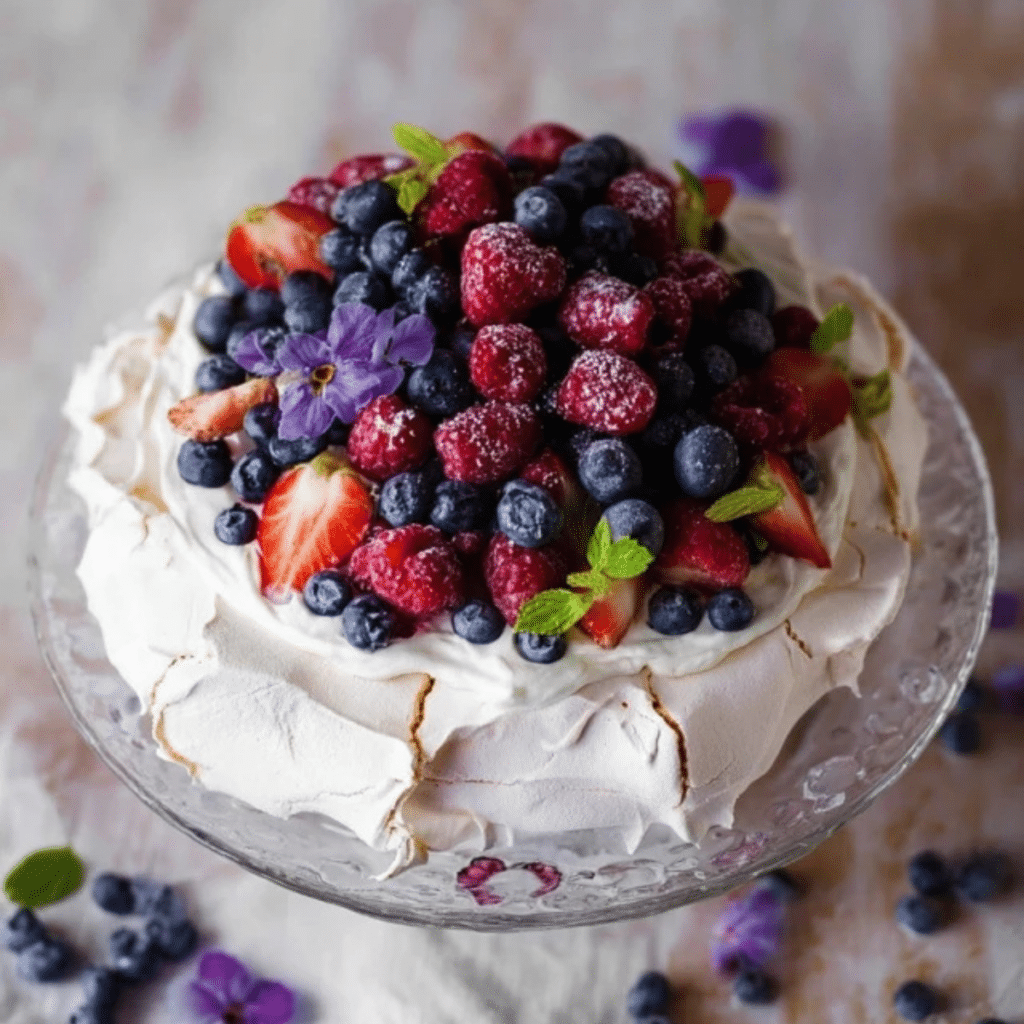
Table of Contents
Why This Pavlova Recipe Stands Out
A well-made Pavlova is the perfect balance of simplicity and elegance. The dessert originated in Australia and New Zealand and has become popular worldwide for its airy texture and versatility.
One reason this Pavlova recipe is so loved is its minimal ingredient list. With only a handful of pantry staples like egg whites and sugar, you can create a stunning dessert that rivals bakery creations. Despite its delicate appearance, Pavlova is surprisingly forgiving and adaptable.
Another advantage of Pavlova is how customizable it is. You can top it with seasonal fruits, flavored whipped cream, citrus curd, or berry compote. The crisp meringue base acts as a blank canvas for creative toppings.
This Pavlova also works beautifully for entertaining. The meringue shell can be made ahead of time and assembled with whipped cream and fruit right before serving. This makes Pavlova ideal for dinner parties, birthdays, or festive occasions when you want a dessert that feels special without requiring last-minute baking.
Ingredients for the Perfect Pavlova
Creating the ideal Pavlova relies on a few simple ingredients that work together to build its signature texture.
• Egg Whites: The foundation of Pavlova. When whipped, they create the airy structure that forms the crisp outer shell and soft interior.
• Sugar: Stabilizes the whipped egg whites and gives Pavlova its glossy, marshmallow-like texture while adding sweetness.
• Cream of Tartar: An acidic ingredient that helps stabilize the meringue and maintain the structure during baking.
• Vanilla Extract: Adds subtle warmth and aroma that enhances the flavor of the Pavlova base.
• Salt: A small pinch balances the sweetness and deepens the overall flavor.
• Heavy Whipping Cream: Used to make the creamy topping that contrasts with the crisp meringue.
• Sugar for Whipped Cream: Sweetens and stabilizes the whipped cream topping.
• Lemon Zest: Adds brightness and a refreshing citrus note that complements the sweetness.
• Berry Jam or Lemon Curd: Optional but delicious, adding depth and slight tartness to the whipped cream.
• Fresh Berries: Strawberries, blueberries, blackberries, or currants provide freshness and color while balancing the sweetness of the Pavlova.
Alternative Ingredient Suggestions
One of the best things about Pavlova is its flexibility. If you need substitutions, there are several options that still produce excellent results.
If cream of tartar is unavailable, white vinegar or lemon juice can be used as an acidic stabilizer for the meringue. Both help maintain the structure of the Pavlova while baking.
Superfine sugar is ideal for Pavlova because it dissolves quickly into the egg whites. If you only have regular granulated sugar, simply pulse it in a blender or food processor until finer.
For dairy-free versions, coconut whipped cream or plant-based whipped topping works well with Pavlova. The tropical flavor also pairs beautifully with fresh fruit.
You can also experiment with toppings. Instead of mixed berries, try sliced mango, passion fruit, roasted peaches, or kiwi for a refreshing variation of Pavlova.
Step-by-Step Instructions for Making Pavlova
- Preheat the oven to 350°F and prepare a baking tray lined with parchment paper. Draw a circle about 8–9 inches wide on the parchment as a guide for shaping the Pavlova. Turn the paper over so the ink faces downward.
- Separate the eggs while they are still cold. Egg whites separate more easily when cold, but they whip best at room temperature. Once separated, allow the egg whites to sit at room temperature for about 20 minutes.
- Place the egg whites in a completely clean and dry mixing bowl. Begin beating them at medium speed until they become foamy.
- Add the cream of tartar and continue whipping until soft peaks form. This stage helps create the stable base for the Pavlova meringue.
- Gradually add the sugar one tablespoon at a time while continuing to beat the mixture. Allow each spoonful to dissolve before adding the next.
- Increase the mixer speed slightly and continue beating until the mixture becomes glossy and forms stiff peaks. When rubbed between your fingers, the meringue should feel smooth without sugar grains.
- Add the pinch of salt and vanilla extract, then beat for another 20–30 seconds until fully incorporated.
- Gently spoon the meringue mixture onto the prepared parchment circle. Using a spatula, shape it into a round disk, slightly higher around the edges and slightly indented in the center. This creates the signature Pavlova shape that holds toppings.
- Place the Pavlova in the oven and immediately reduce the temperature to 200°F. Bake slowly for about two hours until the exterior feels dry and crisp.
- Turn off the oven and allow the Pavlova to cool inside with the door closed for at least two hours or overnight. This slow cooling process helps prevent cracking and collapsing.
- Prepare the whipped cream by beating heavy cream with sugar and lemon zest until soft peaks form. Fold in a spoonful of berry jam or lemon curd if desired.
- Just before serving, spread the whipped cream over the cooled Pavlova and top generously with fresh berries.
- Serve the Pavlova immediately to enjoy the contrast between the crisp shell, creamy topping, and juicy fruit.
Tips and Tricks for a Perfect Pavlova
Making Pavlova successfully comes down to technique and patience. A few simple tips can make a big difference in the final result.
Always ensure your mixing bowl and whisk are completely clean and free from grease. Even a small amount of oil can prevent egg whites from whipping properly.
Add sugar gradually while whipping. This allows the sugar to dissolve fully and prevents the Pavlova from becoming grainy.
Avoid overbeating the meringue. Once stiff peaks form and the mixture looks glossy, stop mixing to maintain the ideal texture.
Humidity can affect Pavlova because meringue absorbs moisture easily. Try to make Pavlova on a dry day or in a kitchen without excessive steam.
Cooling the Pavlova slowly inside the oven is essential. Rapid temperature changes can cause the meringue to crack or collapse.
When storing the baked Pavlova shell, keep it in an airtight container at room temperature rather than in the refrigerator. Moisture can soften the crisp texture.
Pairing Ideas and Pavlova Variations
Pavlova is incredibly versatile and can be adapted in many ways depending on season and preference.
A classic Pavlova is topped with whipped cream and mixed berries, but there are many other delicious combinations. Tropical fruits such as mango, pineapple, and passion fruit create a vibrant and refreshing Pavlova variation.
For a richer dessert, drizzle the Pavlova with chocolate sauce or caramel. A spoonful of lemon curd also adds a tangy element that balances the sweetness.
Mini Pavlova nests are another popular variation. Instead of forming one large meringue, pipe or spoon small rounds onto the baking tray. These individual Pavlova servings are perfect for parties and gatherings.
If you enjoy a more textured center, a small amount of cornstarch can be added to the meringue. This creates a slightly softer, marshmallow-like interior in the Pavlova.
Pavlova also pairs beautifully with flavored whipped cream. Try adding vanilla bean, orange zest, or a hint of almond extract for extra depth of flavor.
The Origins and Appeal of Pavlova
Pavlova is believed to have been created in honor of the famous Russian ballerina Anna Pavlova during her tour of Australia and New Zealand in the early twentieth century. Both countries proudly claim the dessert as their own.
The dessert’s airy texture was inspired by the ballerina’s light and graceful movements, which explains the delicate meringue base. Today, Pavlova is considered a national favorite in both regions and is commonly served during holidays and celebrations.
Part of the enduring appeal of Pavlova is its dramatic presentation combined with simple ingredients. The cloud-like meringue topped with whipped cream and vibrant fruit creates a dessert that is visually stunning yet surprisingly easy to prepare.
Another reason Pavlova remains popular is its balance of textures and flavors. The crisp outer shell gives way to a soft center, while the fresh fruit adds brightness and acidity to balance the sweetness.
Because of its flexibility and beauty, Pavlova continues to be a go-to dessert for home bakers and professional chefs alike.
Whether served as a centerpiece dessert or as individual mini treats, Pavlova offers a timeless combination of elegance, flavor, and simplicity that keeps people coming back for another slice.
Conclusion
Pavlova is one of those desserts that feels elegant and impressive while remaining surprisingly simple to make at home. With just a few ingredients—egg whites, sugar, and a stabilizing acid—you can create a crisp, airy meringue base that transforms into a stunning centerpiece once topped with whipped cream and fresh fruit.
What makes Pavlova truly special is its balance of textures and flavors. The crisp outer shell contrasts beautifully with the soft marshmallow-like interior, while the whipped cream adds richness and the berries bring brightness and freshness. This combination creates a dessert that feels light yet satisfying.
Another advantage of Pavlova is its versatility. You can customize the toppings with seasonal fruits, flavored whipped creams, citrus curds, or even chocolate drizzle. Whether you prepare a single large Pavlova for a dinner party or make individual mini pavlovas for guests, the result is always visually striking and delicious.
With proper technique—gradually adding sugar, whipping the egg whites to glossy stiff peaks, and allowing the Pavlova to cool slowly in the oven—you can consistently achieve bakery-quality results at home. Once you master the basics, Pavlova becomes a reliable dessert for holidays, celebrations, and special family meals.
If you are looking for a dessert that combines elegance, simplicity, and irresistible flavor, Pavlova is an excellent choice. Its delicate structure and fresh toppings make it a timeless treat that continues to impress both guests and home bakers alike.
Frequently Asked Questions About Pavlova
What is the difference between Pavlova and meringue?
While both Pavlova and meringue are made from whipped egg whites and sugar, the texture is what sets them apart. Traditional meringue cookies are usually crisp all the way through, while Pavlova has a crisp exterior and a soft, marshmallow-like center. This unique texture makes Pavlova perfect for holding whipped cream and fresh fruit toppings.
Can Pavlova be made ahead of time?
Yes, Pavlova can be prepared in advance. The meringue shell can be baked a day or two ahead and stored in an airtight container at room temperature in a cool, dry place. Avoid refrigerating the Pavlova base because humidity can soften the crisp shell. The whipped cream and fruit should be added just before serving to maintain the best texture.
Why did my Pavlova crack or collapse?
Cracking in Pavlova is actually quite common and often considered part of its rustic charm. However, major collapsing can occur if the egg whites were under-whipped, over-whipped, or if the oven temperature changed too quickly. Allowing the Pavlova to cool slowly inside the oven helps prevent sudden collapse and maintains its structure.
More Relevant Recipes
- Easy Carrot Cake Cookies Recipe
- Limoncello Almond Cake Roll: Easy Citrus Dessert
- Lemon Cheesecake with Strawberry Crust – Bright, Creamy Spring Dessert
Pavlova

Pavlova is a light and airy meringue dessert with a crisp exterior and soft marshmallow-like center. This classic Pavlova recipe is topped with fluffy whipped cream and fresh berries, creating a beautiful dessert that is perfect for holidays, celebrations, and special gatherings.
- Prep Time: 20 minutes
- Cook Time: 2 hours
- Total Time: 2 hours 20 minutes
- Yield: 8 servings 1x
- Category: Dessert
- Method: Baking
- Cuisine: Australian / New Zealand
- Diet: Vegetarian
Ingredients
- 4 large egg whites, room temperature
- 1 cup superfine sugar
- 1 teaspoon cream of tartar (or 1 teaspoon white vinegar)
- 1 teaspoon vanilla extract (optional)
- Pinch of salt
- 1 cup heavy whipping cream
- 1 tablespoon sugar (for whipped cream)
- 1 teaspoon lemon zest (optional)
- 1 tablespoon berry jam or lemon curd (optional)
- 1 pint fresh berries (strawberries, blueberries, raspberries, or blackberries)
Instructions
- Preheat the oven to 350°F (175°C) and line a baking sheet with parchment paper. Draw an 8–9 inch circle on the parchment as a guide and flip it over so the ink faces down.
- Separate the eggs while cold, then allow the egg whites to come to room temperature for easier whipping.
- Place egg whites in a clean, dry mixing bowl and beat on medium speed until foamy.
- Add the cream of tartar and continue whipping until soft peaks form.
- Gradually add the sugar one tablespoon at a time while beating continuously until the mixture becomes glossy and stiff peaks form.
- Add the pinch of salt and vanilla extract and beat for another 20–30 seconds until incorporated.
- Spoon the meringue mixture onto the prepared parchment circle. Shape it into a round disk with slightly raised edges and a shallow center.
- Place the tray in the oven and immediately reduce the temperature to 200°F (95°C). Bake for about 2 hours until the outside is dry to the touch.
- Turn off the oven and allow the Pavlova to cool slowly inside the oven for at least 2 hours or overnight.
- Whip the heavy cream with sugar and lemon zest until soft peaks form. Fold in berry jam or lemon curd if desired.
- Once the Pavlova base is completely cooled, spread the whipped cream over the center and top with fresh berries.
- Serve immediately and enjoy the crisp, airy texture with the creamy topping and fruit.
Notes
- Ensure the mixing bowl and whisk are completely clean and free from grease to help the egg whites whip properly.
- Add sugar slowly to allow it to dissolve completely into the meringue.
- Avoid overbeating the egg whites once stiff peaks form.
- Cooling the Pavlova slowly in the oven prevents cracking and collapsing.
- The meringue shell can be made 1–2 days ahead and stored in an airtight container at room temperature.
- Top the Pavlova with whipped cream and fruit just before serving to keep the texture crisp.
Nutrition
- Serving Size: 1 slice
- Calories: 154 kcal
- Sugar: 25.6 g
- Sodium: 26.5 mg
- Fat: 4.5 g
- Saturated Fat: 2.8 g
- Unsaturated Fat: 1.5 g
- Trans Fat: 0 g
- Carbohydrates: 27.6 g
- Fiber: 0.7 g
- Protein: 2 g
- Cholesterol: 13.6 mg