
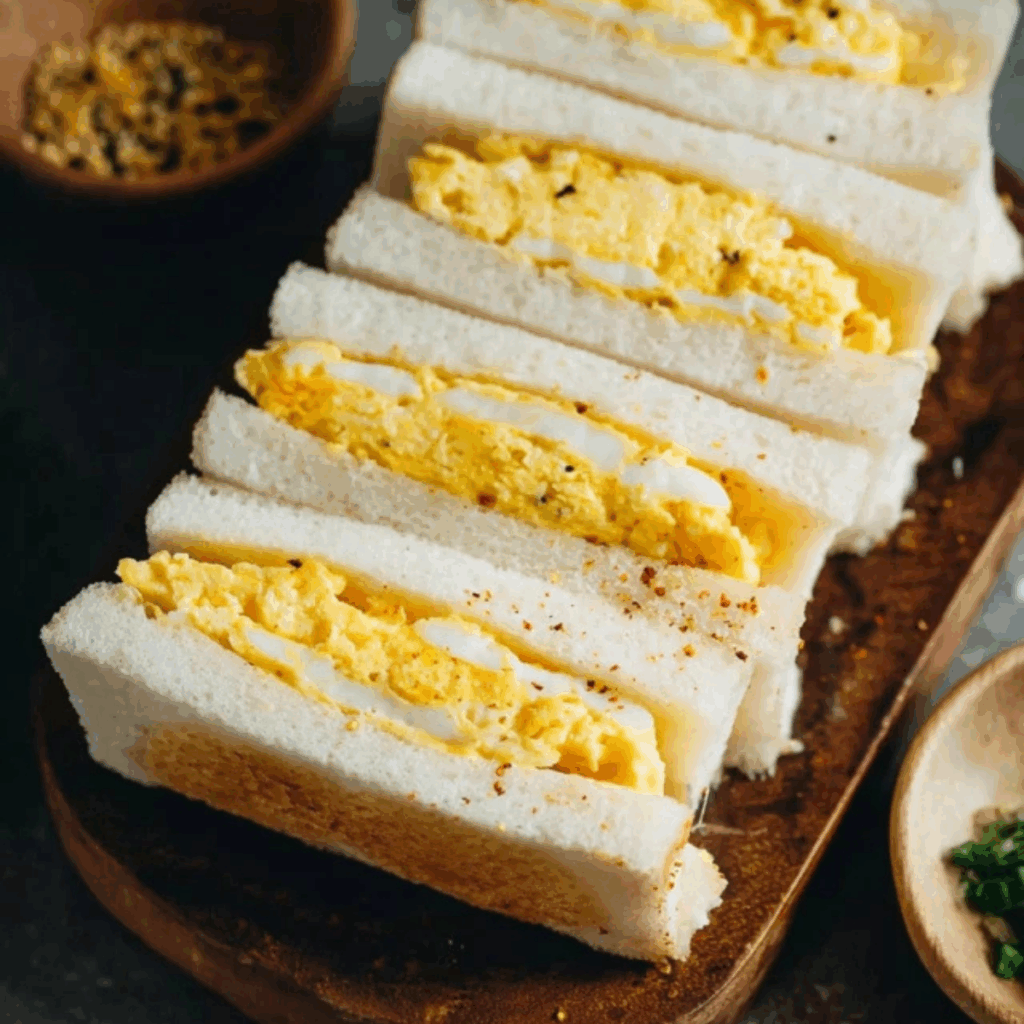
Japanese egg sandwiches, or tamago sando, are a beloved snack in Japan, known for their creamy texture and delightful simplicity. This recipe highlights the ease of preparing a rich, satisfying egg salad sandwiched between slices of soft, fluffy Japanese milk bread. Perfect for a quick lunch, picnic, or even a kid-friendly meal, this Japanese egg sandwich brings a taste of Japan right to your kitchen.

Table of Contents
Why You’ll Love This Japanese Egg Sandwich
The Japanese egg sandwich, or tamago sando, stands out for its rich, creamy egg salad, made from soft-boiled eggs, and paired with the light, sweet flavor of Japanese milk bread. Whether you’re craving something savory for breakfast or looking for a unique lunch idea, this sandwich hits all the right notes. The texture of the egg salad is luxuriously smooth, thanks to the use of Japanese mayonnaise, and it perfectly complements the soft, fluffy bread. Plus, it’s incredibly easy to make with minimal ingredients, making it ideal for busy weekdays or special occasions.
Ingredients
To make a delicious Japanese egg sandwich, you’ll need the following ingredients:
• Eggs: The main star of the sandwich, providing a creamy, rich texture when soft-boiled.
• Sugar: A small amount adds a subtle sweetness to the egg salad.
• Salt and pepper: Essential for seasoning, enhancing the flavor of the eggs.
• Milk: Optional, but helps keep the egg salad creamy and smooth, especially if using hard-boiled eggs.
• Japanese mayonnaise: The key to an authentic tamago sando, offering a richer, creamier texture compared to regular mayonnaise.
• Japanese milk bread: Light, fluffy, and slightly sweet bread that makes the sandwich melt in your mouth.
• Unsalted butter: Adds richness and helps the sandwich hold together.
• Chives (optional): For garnish, adding a fresh, mild onion flavor.
Alternative Ingredient Suggestions
If you’re looking for variations, or simply can’t find some of the ingredients, here are a few alternatives:
• Regular mayonnaise: While not as rich as Japanese mayonnaise, regular mayo will still give a nice creamy texture to the egg salad.
• Whole wheat bread: If you’re not able to find Japanese milk bread, opt for a soft, high-quality white bread or even whole wheat for a slightly different flavor profile.
• Vegan mayonnaise: For a dairy-free option, try plant-based mayonnaise and use non-dairy milk in place of regular milk.
Step-by-Step Instructions
- Prepare the eggs: Begin by boiling your eggs. For medium soft-boiled eggs, bring a pot of water to a boil, gently lower the eggs in with a ladle, and cook for 7 minutes. For hard-boiled eggs, cook for 10 minutes. Once done, place the eggs in an ice bath for 2 minutes to stop the cooking process.
- Peel and mash the eggs: Once the eggs are slightly cool, peel them and mash with a fork, breaking the eggs into small pieces. For smoother mashed eggs, you can also use a knife to help break them down into smaller bits.
- Season the egg mixture: Add sugar, salt, and pepper to the eggs and mix well. If you’re using hard-boiled eggs, you can add 1-2 teaspoons of milk to keep the egg salad moist.
- Mix with mayonnaise: Stir in the Japanese mayonnaise, adjusting the amount based on your desired creaminess. Taste and adjust seasoning if necessary.
- Prepare the bread: Spread softened butter evenly on both slices of Japanese milk bread.
- Assemble the sandwich: Spread a generous amount of the egg salad on one slice of bread, then top with the second slice of bread, buttered side down. Press the sandwich gently to compact it.
- Cut and serve: Trim off the crusts, then slice the sandwich in half and garnish with chives if desired.
Tips & Tricks
• Don’t overcook the eggs: Overcooking can make the egg salad dry or give it a sulfuric taste. For the perfect texture, medium-soft boiled eggs are ideal.
• Chill the eggs: After boiling, make sure to chill the eggs in an ice bath to prevent overcooking and to make peeling easier.
• Freshness matters: Use the freshest eggs you can find for a more flavorful sandwich. Organic or free-range eggs often provide a richer, more vibrant taste.
• Bread texture: If you can’t find Japanese milk bread, try using soft, fine-textured white bread. Avoid bread with a thick, tough crust, as it may affect the sandwich’s delicate texture.
Pairing Ideas and Variations
This Japanese egg sandwich pairs wonderfully with a light side salad or a cup of miso soup for a more substantial meal. If you’re looking for additional flavor, try adding a slice of fresh cucumber or a bit of lettuce for crunch.
For a more customizable version, experiment with toppings like avocado, pickled vegetables, or even a dash of soy sauce to enhance the umami flavor of the eggs.
If you have leftover egg salad, it can be easily stored in an airtight container in the fridge for up to 2 days. For best results, assemble the sandwich on the day you plan to eat it to maintain the bread’s softness.
The Perfect Japanese Snack
This Japanese egg sandwich is not only a great option for lunch, but it also makes a wonderful snack or a fun addition to a bento box. Its smooth texture and mild flavors make it a hit with both kids and adults. Whether you’re craving a light bite or seeking an authentic Japanese treat, this tamago sando is sure to satisfy.
Conclusion
In conclusion, the Japanese egg sandwich, or tamago sando, offers a deliciously simple yet satisfying experience that perfectly balances creamy egg salad with the light, fluffy texture of Japanese milk bread. Whether you’re enjoying it for breakfast, lunch, or a quick snack, this sandwich is not only easy to make but also incredibly versatile. With its rich, comforting flavor, it’s no wonder that this iconic Japanese treat has become a favorite in homes and convenience stores across Japan. Try making this easy, flavorful sandwich today for a taste of Japan in your own kitchen.
FAQs About Japanese Egg Sandwich (Tamago Sando)
Can I use regular bread for a Japanese egg sandwich?
Yes, while Japanese milk bread is ideal due to its light, fluffy texture, you can substitute it with high-quality white bread. Look for a soft bread with a fine, spongy crumb to achieve a similar result. However, the sandwich may lack the signature sweetness and softness of milk bread.
How do I store leftover Japanese egg sandwiches?
You can store leftover tamago sando in the fridge for up to 2 days. Wrap the sandwiches in plastic wrap or store them in an airtight container to keep the bread fresh. If you’re using regular bread instead of milk bread, it’s best to prepare the egg salad ahead of time and assemble the sandwiches on the day you plan to eat them.
Can I make this sandwich with hard-boiled eggs instead of soft-boiled eggs?
Absolutely! While soft-boiled eggs provide a creamier texture, you can use hard-boiled eggs for a firmer, more traditional egg salad. If using hard-boiled eggs, add a splash of milk to the salad to help keep it moist and creamy.
More Relevant Recipes
Japanese Egg Sandwich (Tamago Sando)

The Japanese Egg Sandwich (Tamago Sando) is a simple, creamy, and delicious snack featuring soft-boiled eggs mixed with rich Japanese mayonnaise, served between slices of light and fluffy Japanese milk bread. Perfect for a quick meal, this sandwich offers a satisfying, rich flavor with a smooth texture, making it a popular choice for both adults and kids alike.
- Prep Time: 10 minutes
- Cook Time: 15 minutes
- Total Time: 25 minutes
- Yield: 4 servings 1x
- Category: Breakfast & Brunch
- Method: Boil and Assemble
- Cuisine: Japanese
- Diet: Vegetarian
Ingredients
- 6 large Pete and Gerry’s Organic Eggs
- 1/4 teaspoon sugar
- 1/4 teaspoon salt
- 1/4 teaspoon ground black pepper
- 1 to 2 teaspoons milk or plant milk (optional)
- 4 tablespoons Japanese mayonnaise
- 4 slices Japanese milk bread
- 2 tablespoons unsalted butter, softened
- Chives, sliced (for garnish, optional)
Instructions
- Prepare an ice bath in a large bowl. Bring a medium-sized pot of water to boil. Carefully lower the eggs into the water and cook for 7 minutes for medium soft-boiled eggs or 10 minutes for hard-boiled eggs. Transfer the eggs to the ice bath for 2 minutes to stop the cooking process, then peel them while they are still lukewarm.
- Mash the peeled eggs with a fork, breaking them into small pieces. Use a knife to help break the eggs down into smaller bits, if necessary.
- Add sugar, salt, and pepper to the eggs and mix well. Stir in the Japanese mayonnaise and, if needed, add 1-2 teaspoons of milk to keep the egg salad moist.
- Spread softened butter evenly onto both slices of bread. Then, spread a generous amount of the egg salad onto one slice of bread and top with the other slice, buttered side down. Gently press the sandwich together.
- Trim the crusts from the sandwich and cut it in half. Garnish with chives, if desired, and serve immediately.
Notes
- If you prefer soft-boiled eggs, no need for milk. If using hard-boiled eggs, add 1-2 teaspoons of milk for a creamier texture.
- Use high-quality eggs for the best flavor, and consider organic or free-range eggs for a richer taste.
- Make sure to use fresh, soft bread like Japanese milk bread for the best texture and flavor.
- Store leftovers in the fridge for up to 2 days. It’s best to assemble the sandwich on the day you plan to eat it to maintain the freshness of the bread.
Nutrition
- Serving Size: 1 serving
- Calories: 215 kcal
- Sugar: 2.2g
- Sodium: 418mg
- Fat: 15.4g
- Saturated Fat: 4.9g
- Unsaturated Fat: 10.5g
- Trans Fat: 0g
- Carbohydrates: 9g
- Fiber: 0.3g
- Protein: 10.3g
- Cholesterol: 290mg


