
Spring celebrations call for bright flavors, beautiful desserts, and recipes that feel both festive and simple to prepare. This Easter Lemon Bundt Cake is the perfect centerpiece for your holiday table. Bursting with fresh lemon flavor, topped with a sweet glaze, and decorated with colorful Easter candies, it combines elegance with ease.
The beauty of an Easter Lemon Bundt Cake lies in its balance of tangy citrus and soft, moist cake texture. The vibrant lemon zest and juice create a refreshing flavor that feels light after a big holiday meal. Whether you’re hosting brunch, planning a family gathering, or simply baking something seasonal, this lemon bundt cake is a delightful treat everyone will love.
With simple ingredients, easy preparation, and a visually stunning presentation, this cake captures the cheerful spirit of Easter and springtime baking.
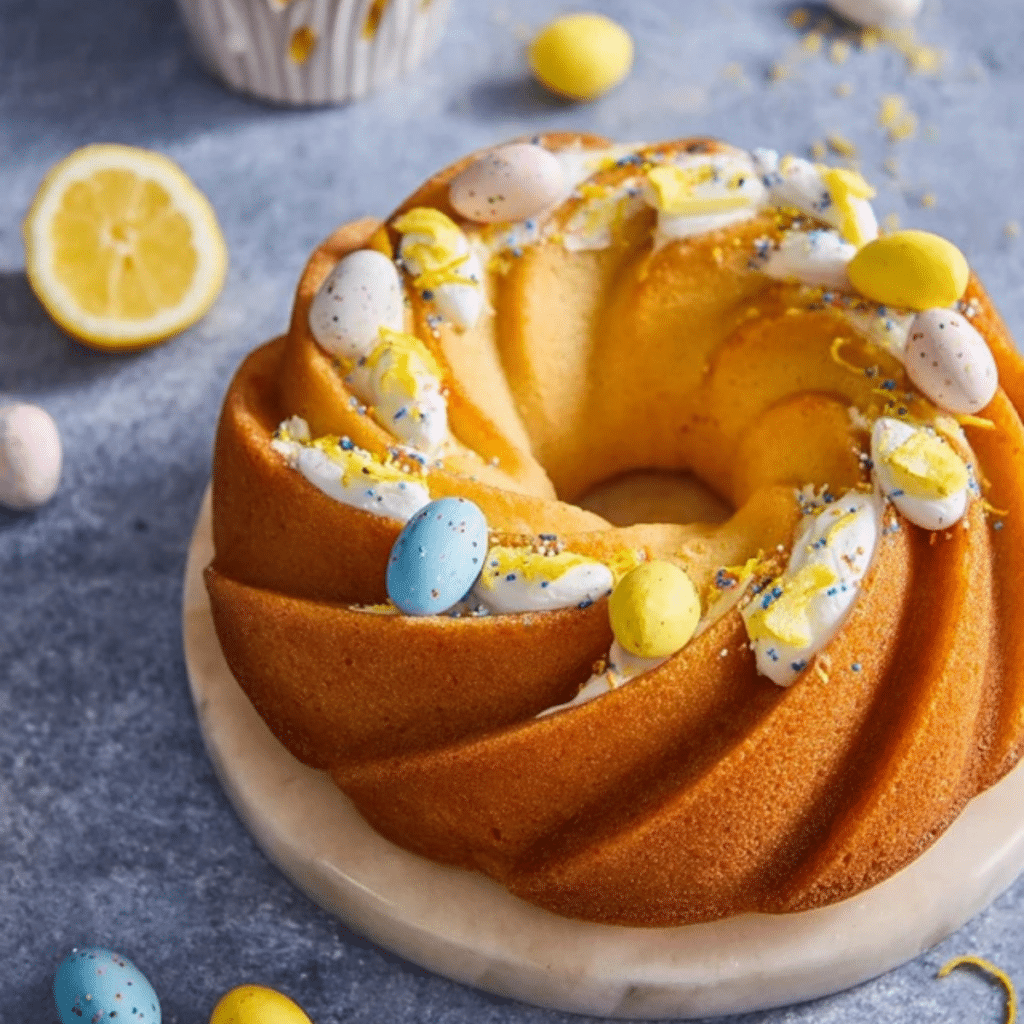
Table of Contents
Why This Easter Lemon Bundt Cake Is Perfect for Spring
A homemade Easter Lemon Bundt Cake stands out because of its bright citrus flavor, moist crumb, and stunning shape. Bundt cakes are naturally elegant thanks to their distinctive ring design, which makes them ideal for holidays and celebrations.
One of the biggest advantages of this Easter dessert is its simplicity. Unlike layered cakes that require frosting and assembly, this lemon bundt cake comes together in a single pan. A smooth lemon glaze drizzled over the top highlights the cake’s ridges and adds just the right amount of sweetness.
The fresh lemon flavor is what truly makes this cake special. Lemon juice and zest bring a vibrant citrus aroma and taste that perfectly complements spring menus. It feels light, refreshing, and festive, making it ideal for Easter brunch, afternoon tea, or family dessert.
Another reason this Easter Lemon Bundt Cake is so popular is its versatility. It pairs beautifully with berries, ice cream, whipped cream, or even extra lemon glaze. With a few decorative chocolate eggs or pastel candies, it instantly becomes a show-stopping Easter dessert.
Ingredients for Easter Lemon Bundt Cake
The ingredients used in this Easter Lemon Bundt Cake are simple pantry staples combined with fresh citrus. Each one contributes to the cake’s flavor, texture, and structure.
• All-purpose flour: Provides structure and stability to the cake batter, creating the classic soft crumb of a bundt cake.
• Baking soda: Helps neutralize acidity from the lemon and assists with the cake’s rise.
• Baking powder: Acts as a leavening agent that creates a light and fluffy texture.
• Salt: Enhances all the flavors in the cake and balances the sweetness.
• Vegetable oil: Keeps the cake moist and tender while adding richness.
• Granulated sugar: Sweetens the cake and balances the tart lemon flavor.
• Eggs: Bind the ingredients together and help create structure and stability.
• Vanilla extract or vanilla paste: Adds depth and warmth to the flavor profile.
• Fresh lemons (juice and zest): The star ingredient that gives the Easter Lemon Bundt Cake its bright citrus flavor and refreshing aroma.
• Yogurt: Adds moisture, creaminess, and subtle tang that enhances the lemon.
• Powdered sugar: Used to create the smooth lemon glaze that coats the cake.
• Milk: Combined with powdered sugar to create a silky glaze consistency.
• Mini chocolate eggs or Easter candy: Decorative topping that gives the cake its festive Easter appearance.
Ingredient Substitutions and Flavor Variations
This Easter Lemon Bundt Cake can easily be adapted depending on what ingredients you have available or your flavor preferences.
If yogurt isn’t available, sour cream works as an excellent substitute. It provides a similar creamy texture and tangy flavor that keeps the cake moist.
For extra flavor, you can fold fresh berries such as raspberries, blueberries, or strawberries into the batter. The combination of berries and lemon creates a bright, fruity twist on the classic lemon bundt cake.
Poppy seeds are another popular addition. A tablespoon or two mixed into the batter adds a subtle crunch and creates a lemon poppy seed variation that many people love.
Coconut flakes can also be added to create a tropical-inspired lemon coconut bundt cake. The coconut flavor pairs surprisingly well with fresh citrus.
If you enjoy deeper flavor notes, a small amount of almond extract can be added alongside the vanilla extract to give the cake a delicate nutty aroma.
For decoration, mini chocolate eggs can be replaced with jelly beans or other Easter-themed candies to match your holiday theme.
Step-by-Step Instructions for Easter Lemon Bundt Cake
Making a homemade Easter Lemon Bundt Cake is surprisingly simple. Follow these steps to create a soft, flavorful cake with a perfect lemon glaze.
- Preheat the oven to 350°F. Prepare a bundt cake pan by greasing it thoroughly. For best results, coat every crevice of the pan to ensure the cake releases cleanly after baking.
- In a medium mixing bowl, whisk together the flour, baking soda, baking powder, and salt. Mixing the dry ingredients evenly helps ensure the cake rises properly.
- In a large bowl, beat together the vegetable oil and granulated sugar until smooth and well combined. This step creates the base of the batter and helps produce a tender cake texture.
- Add the eggs one at a time, mixing well after each addition. Gradual mixing helps create a stable batter and smooth consistency.
- Stir in the vanilla extract, fresh lemon juice, and lemon zest. These ingredients provide the bright citrus flavor that defines this Easter Lemon Bundt Cake.
- Reduce the mixer speed to low. Add the dry ingredients in batches, alternating with the yogurt. Begin and end with the flour mixture. Mix only until the ingredients are combined.
- Pour the cake batter into the prepared bundt pan. Gently tap the pan on the counter to remove air bubbles and help the batter settle evenly.
- Bake the cake in the center of the oven for about 25 to 30 minutes. The cake is ready when a toothpick inserted into the center comes out clean and the top is lightly golden.
- Allow the cake to cool in the pan for about 15 minutes. Carefully invert it onto a cooling rack and let it cool completely before glazing.
- To make the glaze, whisk powdered sugar and milk together until smooth. Drizzle the glaze over the cooled Easter Lemon Bundt Cake so it flows naturally down the sides.
- Decorate the cake with mini chocolate eggs or festive Easter candy for a colorful finishing touch.
Expert Tips for the Best Easter Lemon Bundt Cake
Small baking techniques can make a big difference when preparing an Easter Lemon Bundt Cake. These tips help ensure the cake turns out moist, flavorful, and perfectly shaped.
Use room-temperature ingredients whenever possible. Eggs and yogurt blend more smoothly into the batter and create a better texture.
Avoid overmixing once the flour is added. Too much mixing can develop gluten, which may result in a dense or tough cake.
Accurate measuring is essential for baking success. Use the spoon-and-level method when measuring flour to prevent adding too much.
Properly greasing the bundt pan is crucial. Because bundt pans have intricate designs, even a small ungreased spot can cause sticking.
Allow the cake to cool slightly before removing it from the pan. Flipping it too soon may cause breakage, while waiting too long may cause sticking.
When glazing the cake, make sure it has cooled completely. If the cake is warm, the glaze will melt instead of forming a smooth coating.
Serving Ideas and Flavor Variations
An Easter Lemon Bundt Cake is delicious on its own, but pairing it with complementary flavors can elevate the dessert even more.
Fresh berries make a beautiful and flavorful topping. Strawberries, raspberries, or blueberries add natural sweetness and vibrant color.
Whipped cream or vanilla ice cream creates a creamy contrast to the tangy lemon flavor. These additions make the cake feel extra indulgent.
For a richer citrus flavor, you can drizzle additional lemon glaze over each slice before serving.
Another fun variation is adding a lemon curd swirl inside the cake batter before baking. This creates pockets of intense lemon flavor throughout the cake.
If you enjoy texture in your desserts, sprinkle toasted coconut or chopped nuts over the glaze for added crunch.
This cake also works well as a make-ahead dessert. The Easter Lemon Bundt Cake can be baked a day in advance and stored at room temperature until serving.
Storage and Make-Ahead Tips
Proper storage helps keep your Easter Lemon Bundt Cake moist and fresh for several days.
If storing at room temperature, place the cake in an airtight container or cover it tightly with plastic wrap. It will stay fresh for up to three days.
For longer storage, refrigerate the cake in a sealed container. It can last up to five days in the refrigerator while maintaining its flavor and texture.
Before refrigerating a glazed cake, allow the glaze to set completely so it does not smear.
If needed, the cake can also be frozen. Wrap individual slices tightly and store them in a freezer-safe container for up to two months. Thaw at room temperature before serving.
The Tradition of Citrus Desserts at Easter
Citrus desserts like Easter Lemon Bundt Cake are especially popular during spring holidays. Lemon desserts symbolize freshness and renewal, making them perfect for seasonal celebrations.
The bright flavor of lemon contrasts beautifully with the richer dishes often served during Easter meals. After savory foods like roasted meats or creamy casseroles, a light lemon cake feels refreshing and satisfying.
Bundt cakes themselves have become a holiday favorite because they combine visual elegance with simple preparation. The unique shape naturally creates a beautiful presentation without complicated decorating.
Decorating a lemon bundt cake with pastel candies or chocolate eggs adds a playful holiday element that children and adults both enjoy.
Because of its fresh citrus flavor, beautiful appearance, and easy preparation, the Easter Lemon Bundt Cake has become a beloved spring dessert for many families.
Whether served at Easter brunch, a spring picnic, or a family gathering, this vibrant lemon cake is guaranteed to brighten the table and bring a sweet ending to any celebration.
Conclusion
This Easter Lemon Bundt Cake is the perfect combination of bright citrus flavor, soft texture, and festive presentation. The fresh lemon juice and zest create a refreshing taste that feels light yet satisfying, making it an ideal dessert for spring celebrations and Easter gatherings.
What makes this cake truly special is its simplicity. With basic pantry ingredients and a straightforward baking process, anyone can create a beautiful Easter Lemon Bundt Cake that looks impressive on the table. The classic bundt shape, silky lemon glaze, and colorful Easter candy decorations transform this easy lemon cake into a stunning holiday centerpiece.
Whether you serve it at Easter brunch, as an afternoon treat with tea, or as the grand finale to a family dinner, this lemon bundt cake delivers both flavor and elegance. Its moist crumb, vibrant citrus aroma, and cheerful decoration make it a dessert that guests of all ages will remember.
If you’re looking for a spring dessert that’s easy to make, visually beautiful, and bursting with fresh flavor, this Easter Lemon Bundt Cake is the perfect recipe to bake year after year.
Frequently Asked Questions About Easter Lemon Bundt Cake
How do I keep my Easter Lemon Bundt Cake from sticking to the pan?
Properly greasing the bundt pan is the most important step to prevent sticking. Make sure every groove and corner of the pan is coated with grease or cake release mixture. Allow the Easter Lemon Bundt Cake to cool in the pan for about 15 minutes before flipping it onto a cooling rack. This allows the cake structure to set while still releasing easily.
Can I make Easter Lemon Bundt Cake ahead of time?
Yes, this Easter Lemon Bundt Cake is a great make-ahead dessert. You can bake the cake one day in advance and store it covered at room temperature. Add the glaze and decorations shortly before serving to keep the presentation fresh and beautiful for your Easter celebration.
Can I freeze Easter Lemon Bundt Cake?
Absolutely. Once the Easter Lemon Bundt Cake has cooled completely, wrap it tightly in plastic wrap and store it in a freezer-safe container. It can be frozen for up to two months. When ready to serve, thaw the cake at room temperature and add the lemon glaze afterward for the best texture and flavor.
More Relevant Recipes
- Easy Easter Egg Macarons Recipe for Perfect Spring Treats
- Easy M&M Cookie Bars Recipe (Soft, Chewy & Colorful)
- Easy Coconut Custard Cake with Creamy Coconut Filling
Easter Lemon Bundt Cake

This Easter Lemon Bundt Cake is a bright, moist spring dessert bursting with fresh lemon flavor. Topped with a sweet lemon glaze and decorated with colorful chocolate eggs, it’s an easy and festive cake perfect for Easter brunch, family gatherings, and seasonal celebrations.
- Prep Time: 15 minutes
- Cook Time: 30 minutes
- Total Time: 45 minutes
- Yield: 10 servings 1x
- Category: Dessert
- Method: Baking
- Cuisine: American
- Diet: Vegetarian
Ingredients
- 2 cups all-purpose flour
- 1/2 teaspoon baking soda
- 1 teaspoon baking powder
- 1/2 teaspoon salt
- 3/4 cup vegetable oil
- 1 1/4 cups granulated sugar
- 3 large eggs (room temperature)
- 1 teaspoon vanilla extract
- 2 tablespoons fresh lemon zest
- 1/4 cup fresh lemon juice
- 1 cup plain yogurt (room temperature)
- 1 cup powdered sugar
- 2–3 tablespoons milk
- 1/2 cup mini chocolate eggs or Easter candy for decoration
Instructions
- Preheat oven to 350°F (175°C) and thoroughly grease a bundt pan to prevent sticking.
- In a medium bowl, whisk together flour, baking soda, baking powder, and salt until evenly combined.
- In a large mixing bowl, beat vegetable oil and granulated sugar until smooth and well combined.
- Add eggs one at a time, mixing well after each addition to create a smooth batter.
- Mix in vanilla extract, lemon juice, and lemon zest to infuse the batter with bright citrus flavor.
- Reduce mixer speed to low and add the dry ingredients in batches, alternating with the yogurt. Begin and end with the flour mixture and mix just until combined.
- Pour the batter into the prepared bundt pan and gently tap the pan on the counter to remove air bubbles.
- Bake for 25–30 minutes or until a toothpick inserted into the center comes out clean.
- Allow the cake to cool in the pan for 15 minutes, then carefully invert onto a wire rack to cool completely.
- Prepare the glaze by whisking powdered sugar with milk until smooth and pourable.
- Drizzle the glaze over the cooled cake and decorate with mini chocolate eggs or Easter candy before serving.
Notes
- Use room temperature eggs and yogurt for a smoother batter and better texture.
- Avoid overmixing the batter once flour is added to keep the cake soft and tender.
- Grease every crevice of the bundt pan to ensure the cake releases easily.
- Allow the cake to cool completely before adding glaze to prevent melting.
- Store the cake in an airtight container at room temperature for up to 3 days or refrigerate for up to 5 days.
Nutrition
- Serving Size: 1 slice
- Calories: 340 kcal
- Sugar: 28 g
- Sodium: 210 mg
- Fat: 16 g
- Saturated Fat: 3 g
- Unsaturated Fat: 12 g
- Trans Fat: 0 g
- Carbohydrates: 45 g
- Fiber: 1 g
- Protein: 5 g
- Cholesterol: 55 mg


